
From a Kansas Blacksmith Shop to a Modern Foundry: The Farrar Corporation Story
Some companies are built in a big city within a boardroom. Farrar Corporation was built in a basement in a small town.
It’s 1933 in Norwich, Kansas. A man named Ernest Farrar started fixing farm equipment and doing blacksmith work for his neighbors in the basement of his home. The repair shop ended up settling in a building on the east side of Main Street in the first block, south of the highway. Just a man with a set of tools, and farmers who need their equipment running before the next harvest. That small repair shop, Farrar Repair Shop, is where our story begins, and it’s the reason everything we do today still carries the family name.
A Family Business Takes Shape
By 1947, Ernest’s sons Max and Paul Farrar had joined him, and the shop grew into Farrar Machine Shop. The work got more specialized with building improvement drives for combines, swapping out worn chain drives for V-belts and pulleys, rebuilding concaves and cylinder bars, or repairing variable speed drives. It was hands-on, problem-solving work, the kind that earns trust from one satisfied farmer at a time. That original building is still standing in Norwich today, still part of our operations, a bold reminder of where we started.

The turning point came in 1961, when a local farmer named Bill Davis visited from Murdock, Kansas, with a simple question: could Max and Paul Farrar build something better than the sickle drive on his John Deere combine? They said yes. They fabricated and manufactured the first 100 sickle drives themselves, and the demand didn’t stop there. Farrar began partnering with another foundry to cast the parts, and that collaboration led to what became one of the company’s signature products for years – the SD200 and SD400 sickle drives, trusted on John Deere combines across the country.

Pouring Our Own Iron
By 1965, the sickle drive business was growing fast enough that Max and Paul started asking a bigger question: what does the future of this company actually look like? The answer arrived in 1967, when Farrar Machine Shop opened its own foundry with a gas-fired Reda furnace, manual molding on two lines, oil sand cores, and a lot of determination. The first casting we ever poured in August of 1967, went straight into a sickle drive assembly. We poured all seven castings that made up that assembly ourselves, for the first time, under our own roof.

Word travels fast in manufacturing circles. Within a month or two of opening that foundry, other companies were already asking Farrar to cast parts for them. What started as a way to build our own product had become something bigger, a foundry that could serve an entire industry.
To keep up, the team engineered their own solutions. They built a custom pouring floor with a wheeled cart system, each cart holding four molds, running back and forth on tracks, creating four molding lines and being one of the reasons Farrar could pour iron every single day.

The patterns themselves were hand-shaped mahogany on plywood, made in-house at our foundry. It was resourceful, hardworking manufacturing.

Building for the Future
Growth has a way of outpacing even the best plans. By 1974, production demand had outgrown the shop’s capacity, and the family made its boldest move yet: Farrar Corporation was officially incorporated, and construction began on a brand-new foundry building in Norwich, designed personally by Joe Farrar. On February 13, 1976, the new foundry poured its first batch of iron.

That same foundry is still running today, on that same ground in Norwich, Kansas, supplying customers nationwide with turnkey ductile iron castings. Five decades and multiple generations later, the location hasn’t changed, but nearly everything else has.
The 1990s brought new capability. Farrar began offering Austempered Ductile Iron (ADI) alongside our standard ductile iron grades, giving customers access to higher-strength, more wear-resistant components. In 1992, we built our administrative office on the site of the original foundry, and moved our dedicated pattern shop and pattern storage facility over to the new building as well.

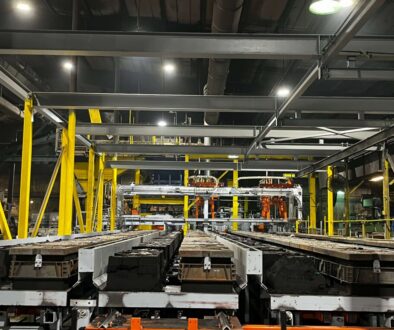
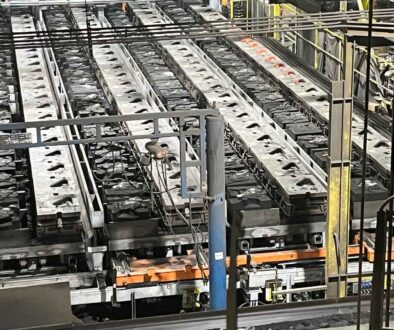
By 1998, we had replaced our three Hunter molding lines with brand-new Roberts Sintos automated molding lines, a major step forward in precision and consistency.
Then, in 2000, Farrar expanded beyond Norwich for the first time, opening a second facility in Manhattan, Kansas, home to a second machine shop, heat treatment operations, and our corporate offices. It was proof that a company built on farm repair work could grow into a true full-service manufacturer, without ever losing the values it started with.

Investing in What’s Next
Since 2000, growth at Farrar hasn’t slowed down, it’s accelerated. Farrar has consistently focused on new investments in capacity, precision, or capability:


- 2019 – New Inductotherm furnaces and a NTX-1500 machining center installed.
- 2020 – A second NTX-1500 machining center was added to keep pace with demand.
- 2022 – A new shakeout system in the foundry, along with a new 20″x24″ Roberts Sintos FBO 3 molding line and mold handling system, replacing one of our older lines.
- 2024 – A 3D Vision Cell automated robot from BG Automation added to our cleaning room, a Hexagon Absolute Arm 8525 seven-axis laser scanner added to our quality department, and a new Laempe LL10 core machine installed in our foundry.
And we’re not done. A new 20″x24″ Roberts Sintos FBO 3 molding line is already purchased and scheduled for installation in January 2027. One more step in a nearly century-long pattern of reinvesting in our people, our process, and our product.
Still Family. Still Farrar.
Ernest Farrar started the repair and blacksmith shop in 1933 with a focus on helping people. Nearly a century later, Farrar Corporation still runs on those same ideas: solve the problem in front of you, do the work right, and take care of the people who depend on you. That original purpose is now built into a modern foundry, pouring precision ductile iron castings for customers across the country.
Farrar Corporation today is a vertically integrated manufacturer – pattern design, casting, heat treating, CNC machining, and assembly, all handled in-house across our Norwich and Manhattan, Kansas facilities. It means tighter tolerances, faster lead times, and fewer hand-offs between the people building your parts. And because we’re ISO 9001:2015 certified, every casting we ship is certified for physical properties, chemistry, and microstructure, and traceable back to the day it was poured.
We’re proud of where we came from, but we’re just as focused on where we’re headed. That means continuing to invest in modern equipment, expanding our capacity, and pushing our capabilities further so we can keep delivering the high-quality castings, machining, and turnkey casting solutions our customers count on. And through all of it, one thing hasn’t changed since the day Ernest Farrar first opened his repair shop: we believe customer support should be second to none, focusing on helping our customers with real responsiveness and creative solutions when a project calls for something different. That’s not a slogan for us, it’s how our family business earns your business, one part at a time.
From a single blacksmith shop to a nationwide supplier of ductile iron castings. We’re just getting started on our next chapter.
Ready to work with a foundry that treats your project like it’s family? Contact Farrar Corporation today.